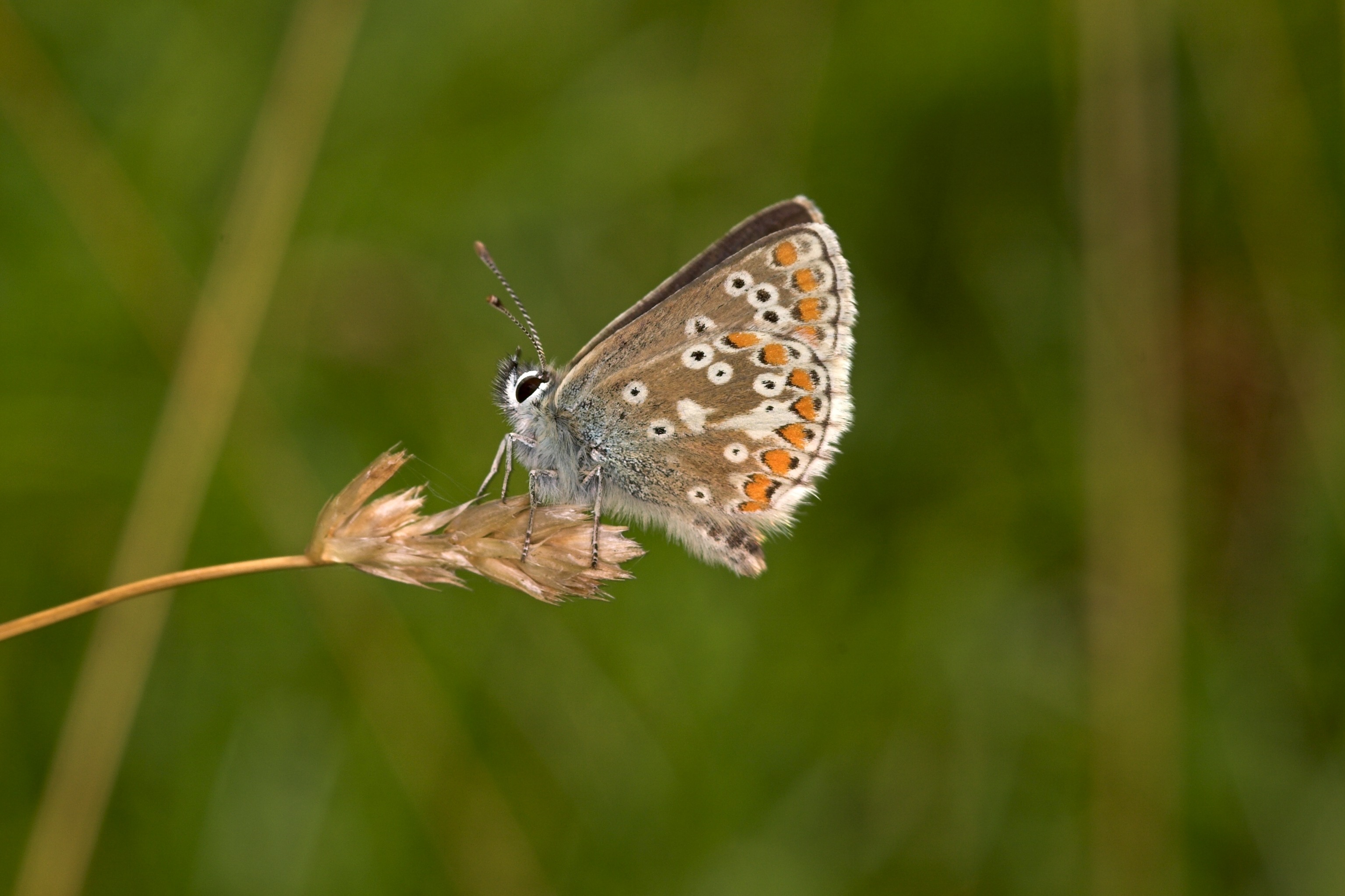

The Northern Brown Argus (Aricia artaxerxes), or Argas donn tuathach in Gaelic, is one of Scotland’s smallest butterfly species. With a restricted range and picky requirements, it is one of the trickier species to find. The butterfly lays its eggs exclusively on Common Rock-rose (Helianthemum nummularium), which grows on base-rich soils, typically in sunny, species-rich areas.


Across Scotland there are approximately 550 sites where the butterfly has been recorded. Dumfries and Galloway has 54 coastal sites for Northern Brown Argus, constituting about 10% of the Scottish total. Prior to Species on the Edge, little was known about the status and threats facing many of these sites. For instance, some sites had records dating back several decades, with no subsequent records. The project presented the opportunity to raise awareness, increase the survey effort, engage landowners, and tackle site threats to help conserve this rare butterfly in the region

Site Surveys in Dumfries and Galloway
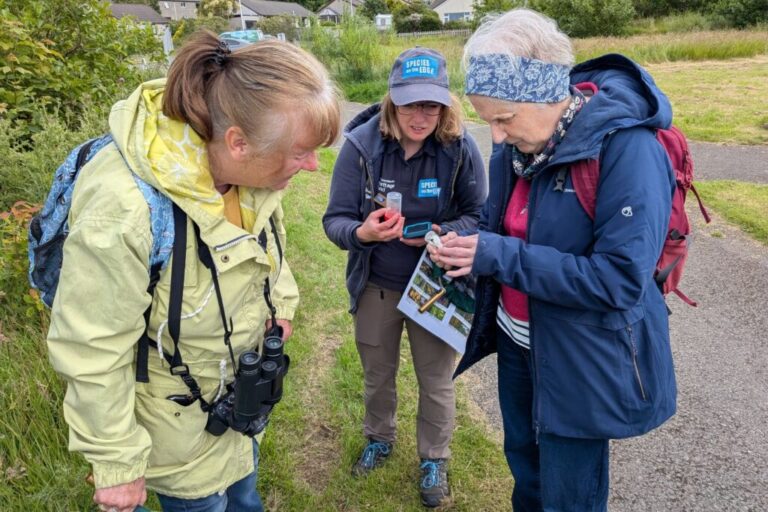
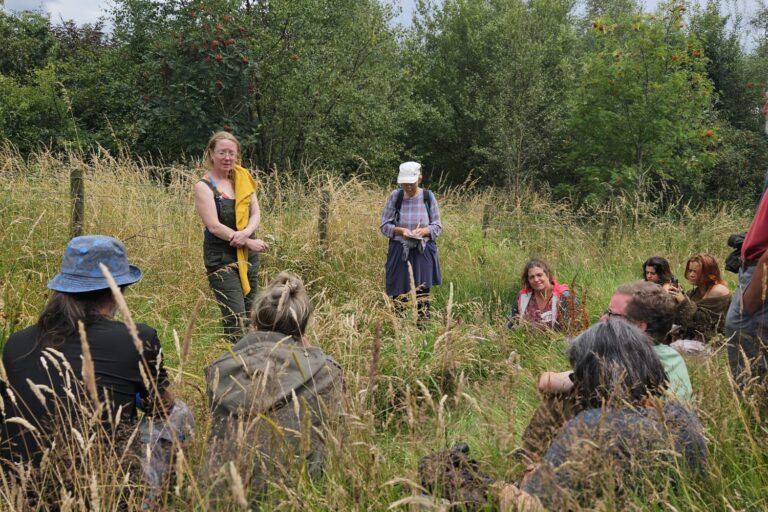
Between 2023 and 2025 there has been considerable effort by Species on the Edge staff and volunteers to survey Northern Brown Argus (NBA) in Dumfries and Galloway. A small but skilled suite of volunteers has been trained up via online and in-person training sessions to carry out detailed site surveys, looking for NBA adults and eggs, Common Rock-rose and any threats to the sites.
A total of 47 sites have been surveyed so far. Common Rock-rose was recorded at 41 of these sites. 37 of these sites have records of NBA since 2016. These numbers are fairly encouraging in that, although the food plant appears to have been lost from a handful of sites, it is still present at most sites, and as is the butterfly.
Kirkcudbrightshire is unquestionably the stronghold for the butterfly in the region – this is where most of the sites are located. In Wigtownshire, the butterfly is still present at a handful of discrete sites on the Machars, though these are sites quite isolated. However, we have been unable to confirm whether the butterfly is still present on the Rhins of Galloway. Surveys suggest a decline in the presence of Common Rock-rose on the Rhins.

Site condition
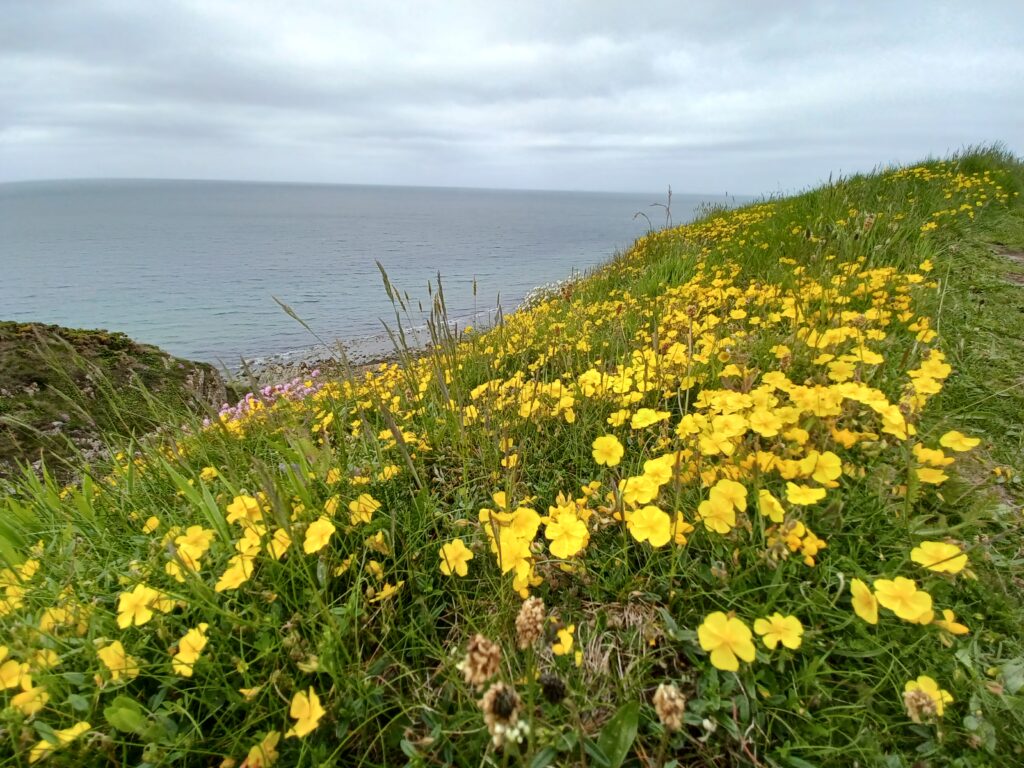
We asked surveyors to indicate the presence of any threats to the habitat, which will help inform any remedial action. Gorse and scrub are the biggest threats identified, which mirrors issues found elsewhere in Scotland. Ecological succession, soil enrichment, and changes in land management can cause gorse and scrub encroachment and if left unchecked this can smother Common Rock-rose. Despite these threats, there are still several sites in good or very good condition, and species-rich grassland indicators were noted at many sites.
| Threat level | No. of sites |
| Threat | 16 |
| Slight threat | 14 |
| No apparent threat | 11 |
| Type of threat | |
| Gorse | 14 |
| Scrub | 12 |
| Bracken | 3 |
| Undergreazing | 3 |
| Lack of Rock-rose | 2 |
| Overgrazing | 1 |
| Sea-level rise | 1 |
Land management
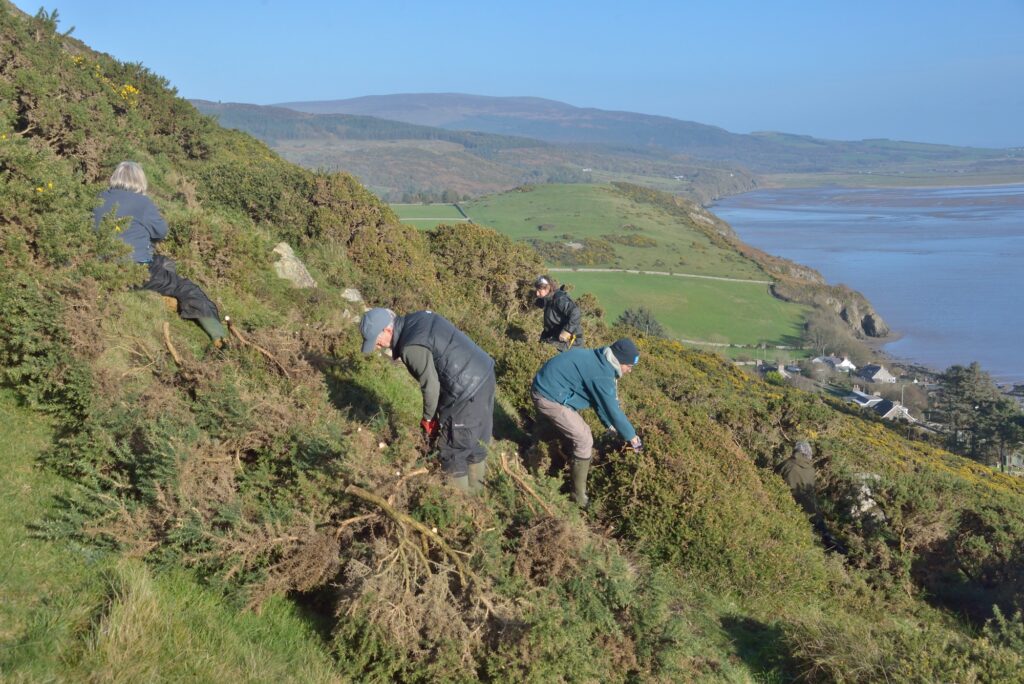
Through Species on the Edge we have engaged several landowners across the region who own land with Northern Brown Argus present and have provided management advice and recommendations where needed. We have led volunteer work parties at four of these sites to clear scrub. These work parties often involve being out in cold and wet conditions, cutting and handling prickly gorse bushes. Thank you to the volunteers, who through a tremendous effort have contributed well over 150 hours of their time to help make a difference.
These work parties are in addition to those led by Jim Asher at Carrick, which will continue beyond Species on the Edge. If you wish to join the mailing list for these work parties please contact Jim: jim.asher@btinternet.com
Surveys in 2026 (and beyond)
In 2026 we are seeking volunteers to help make this year the biggest effort for Northern Brown Argus yet. Whether you have one afternoon to spare or are looking for more commitment, there is something for you! We are looking for volunteers for the following:
- Survey the handful of sites that haven’t yet been surveyed in detail (see black dots on above map).
- ‘Site Champions’ to adopt one or more of our sites, ideally higher priority sites. This will be to check on butterfly presence and habitat conditions annually, and report back on any issues (see map below for priority sites).
- Conduct butterfly transects or timed egg counts at selected sites to help improve long-term population monitoring.
Site surveys are typically conducted in June and July. Transects are conducted in June to coincide with the peak flight period of the butterfly. Timed egg counts are conducted during late June and July.

Volunteer training
Full training of survey techniques can be offered to prospective volunteers:
5th May, 7pm: Online training for conducting site visits to look for adults, eggs and habitat.
12th June, Kirkandrews, Borgue: In-person training for Northern Brown Argus site surveys and monitoring.
If these dates unsuitable for you, we may be able to offer 1-1 training on request.
For more information in these opportunities and to register your interest, please contact Jack Barton: jack.barton@rspb.org.uk