Baltasound Primary create new name for rare Shetland beastie 🪲
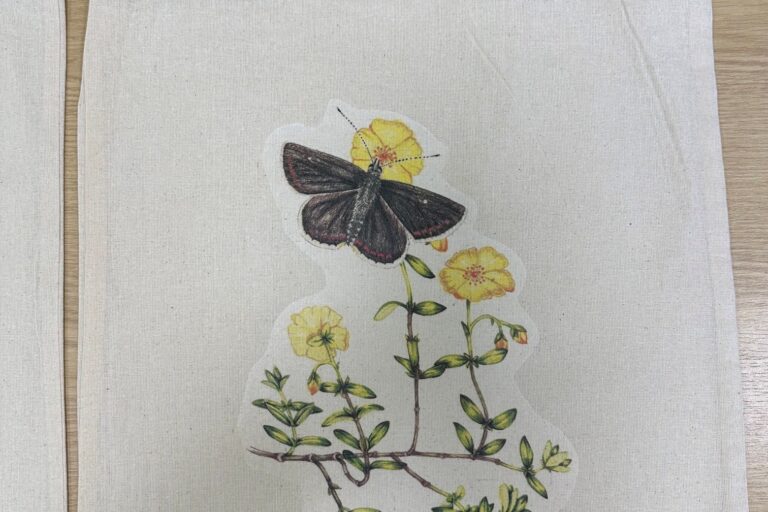
One of the highlights of recent months has been working with Baltasound Primary School and Shetland for Wirds to find a local name for the Plantain Leaf Beetle. Only found in Orkney, Shetland and Loch Etive in the UK, we thought it fitting the rare beetle get a proper Shetland name. Inspired by the beetle’s distinctive bold red stripes, the children chose ‘da Peerie Red Scarred Wan’ for the new name. They also came up with a creative (if fictional) story explaining how da Peerie Red Scarred Wan got its distinctive red stripes, and the story has now been brought to life in a fantastic short animation:
If you visit the Keen of Hamar – the beetle’s home here in Shetland – keep an eye out for da Peerie Red Scarred Wan and record any sightings on iRecord: www.irecord.org.uk.
Boosting Shetland’s drummie bees 🐝
Shetland’s bumblebees need our help. Since the 1940s, the UK has lost 97% of its wildflower-rich meadows, and bumblebees have suffered dramatically as a result. This winter and spring we’ve been laying the groundwork to address that here in Shetland.
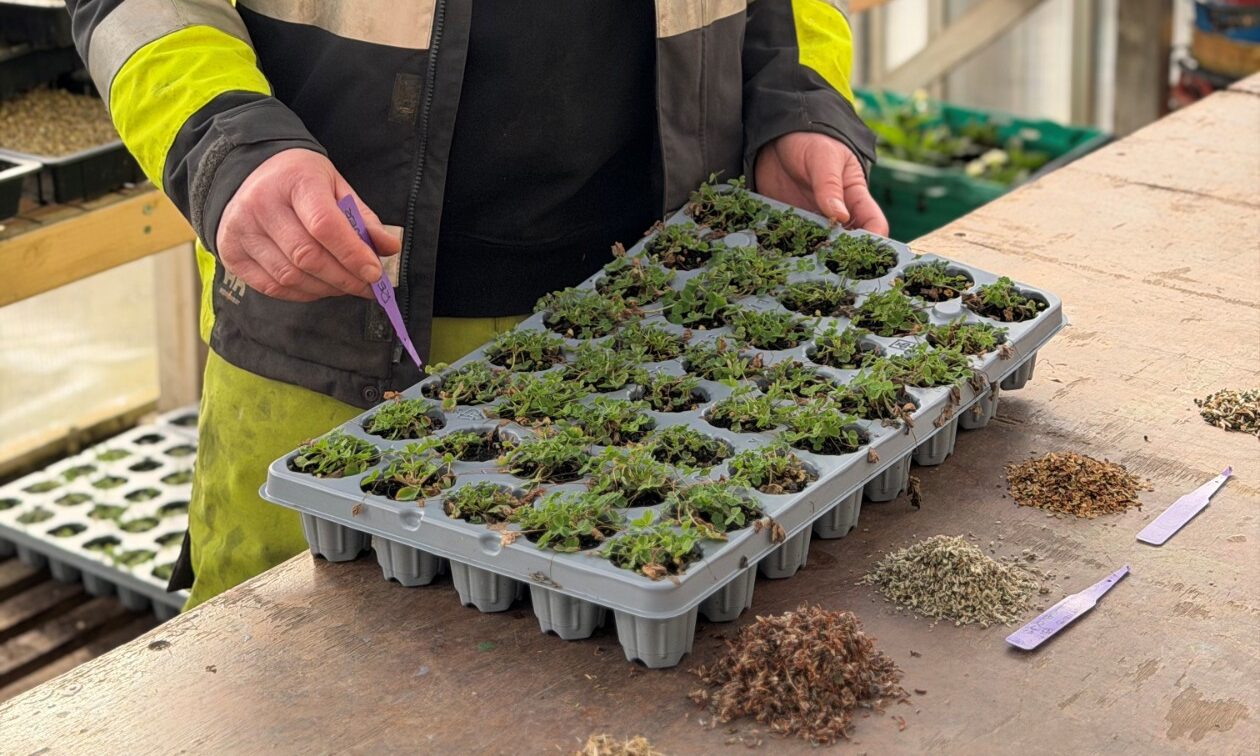
Working alongside Shetland Amenity Trust (SAT) and Shetland Islands Council, we’ve begun creating areas of native wildflower meadow at Aith Junior High School, Tingwall Primary, and in areas of Lerwick. SAT staff and volunteers have spent much of the past year collecting native seeds from across the isles, from Scatness in the south to Mangaster in the north, including species like bird’s-foot trefoil, red clover, devil’s bit scabious and tufted vetch. Later this spring, pupils from the schools will help sow the seeds themselves.
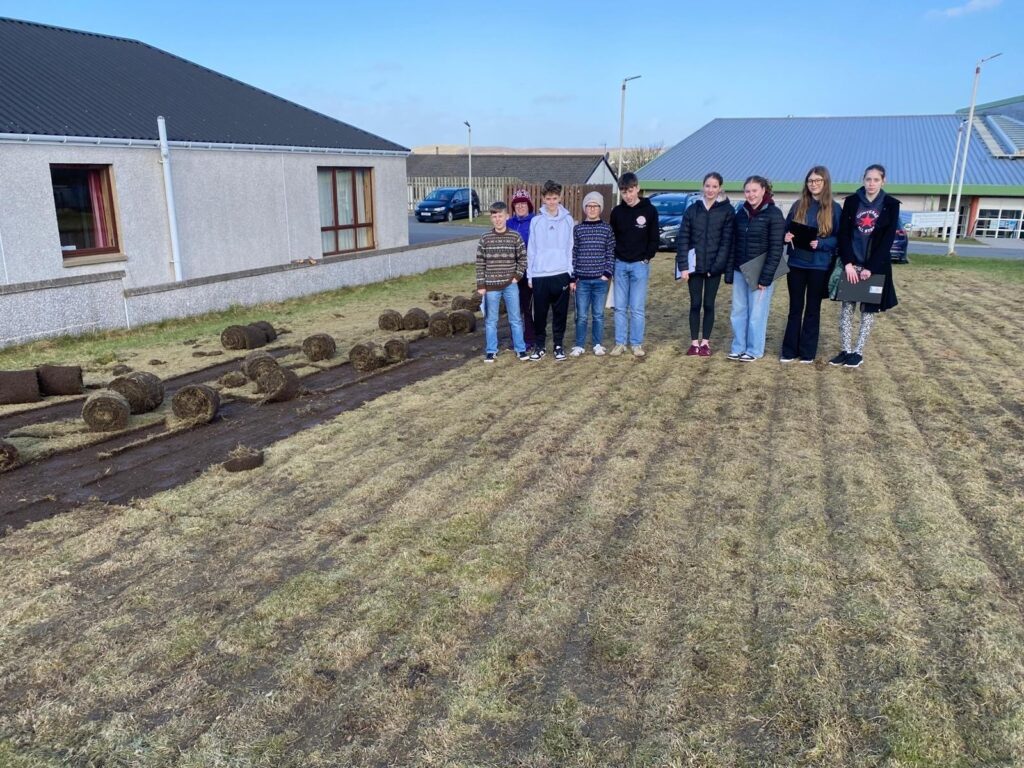
We’ve also put in a mini wildflower meadow at Quendale Mill. Shetland Aets will be planted next to the meadow – a reminder of the deep intertwining of our natural and cultural heritage.
We’re now calling on crofters across Shetland to get involved in our effort to boost our wildflowers and bolster our bees: create a new wildflower meadow, enhance an existing one, or donate seeds from wildflowers you grow. We can help with guidance, ground preparation, and can provide locally sourced seeds and plug plants. To find out more, contact Becca, our Species on the Edge Project Officer for Shetland: rebecca.jackson@rspb.org.uk.
Bringing BeeWalks to Shetland
We’ve also been working hard to grow Shetland’s BeeWalk community as we head into the final year of Species on the Edge. BeeWalk is a national citizen science scheme run by the Bumblebee Conservation Trust, where volunteers walk a set route each month between March and October, recording the bumblebees they see. The data helps us understand which species are struggling and where, and informs conservation action.
Previous to Species on the Edge Shetland had zero BeeWalkers. Now 16 Species on the Edge volunteers are registered! Volunteer BeeWalker Christine Johnson told us: “My first BeeWalk was such a great learning experience and a moment to remember, since we encountered an Early bumblebee nest! I’m looking forward to starting the BeeWalks again this year and seeing how many I can find.”
If you’d like to take part in Britain’s most northerly BeeWalks, get in touch with Rebecca: rebecca.jackson@rspb.org.uk.

Nathalie spreads the word on virtual fence collars 🐄
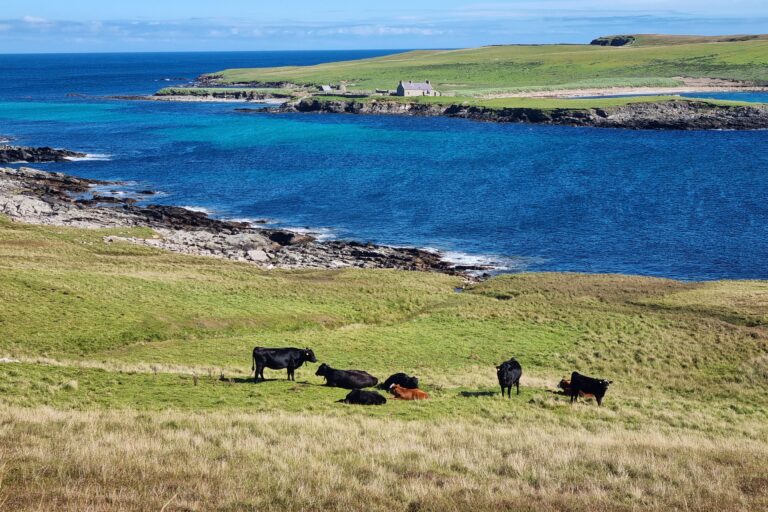
Species on the Edge Shetland Area Manager Nathalie Pion gave a talk to the Scottish Crofting Federation this winter on virtual fence collars and how they can support biodiversity-friendly land management. Virtual fence collars are GPS-enabled devices worn by cattle that allow land managers to control where animals graze without the need for physical fences – opening up previously inaccessible areas and helping manage grazing in ways that benefit wildflowers and pollinators. Through Species on the Edge, we’ve funded and supported the use of 106 virtual fence collars across the Inner Hebrides, Outer Hebrides and Shetland.
Learn more about virtual fence collars and hear from one of the crofters we have been working with, Laura, in the talk, available now on YouTube:
Getting arty in nature this summer 🎨
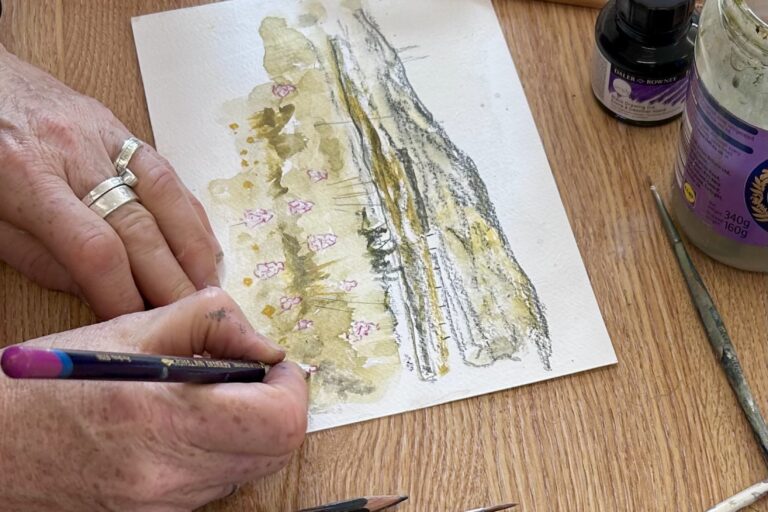
Looking ahead to summer, we’re excited to share that Species on the Edge is running a series of free Art in Nature workshops in Shetland, helping people connect with their local cultural and natural heritage through art.
The series kicks off with three workshops led by artist Aimee Labourne, titled ‘From the perspective of bees’. Aimee will guide participants through immersive drawing techniques inspired by our local drummie bees, exploring the landscape of Bressay through their eyes. The first workshop – a heritage and sketching walk – takes place on 14th June at Wadbister, Bressay, followed by further sessions on 28th June and 5th July.
Following Aimee Labourne’s workshops will be a set of workshops led by Cheryl Jamieson exploring the fascinating landscape of the Keen of Hamar through the art of glass-making. Dates will be announced on the Species on the Edge Facebook page (@SpeciesontheEdge) and via the mailing list.
To register for Aimee’s workshops, visit: www.speciesontheedge.co.uk/events/art-in-nature-shetland.