Key facts
- Gaelic names: Gèadh-bhlàr
- Length: 65 – 78cm | Wingspan: 130 – 165cm | Weight: 1,900 – 2,500g
- When in Scotland: October – April
- UK Conservation status: Red
- Species on the Edge areas: Argyll and the Inner Hebrides; Solway
Species information
How to identify
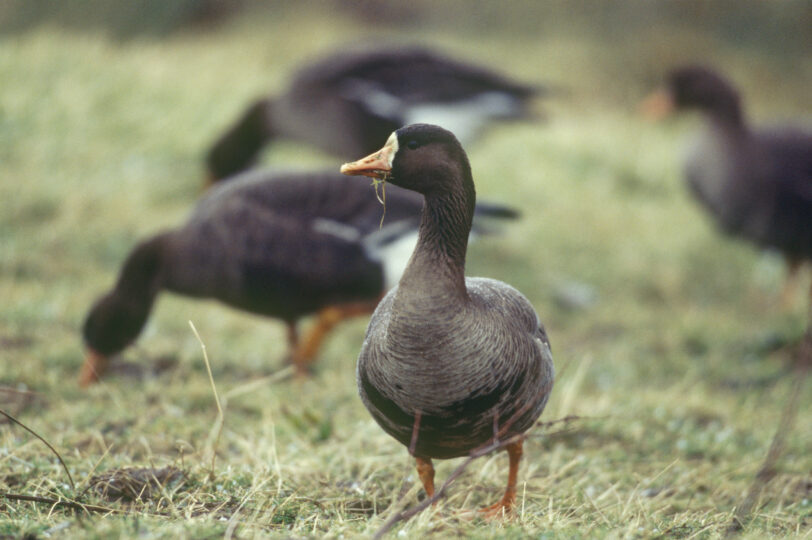
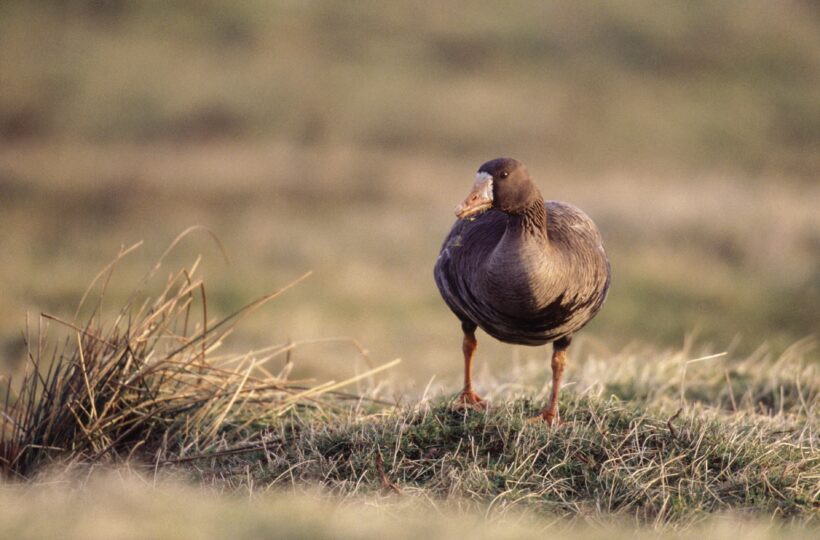
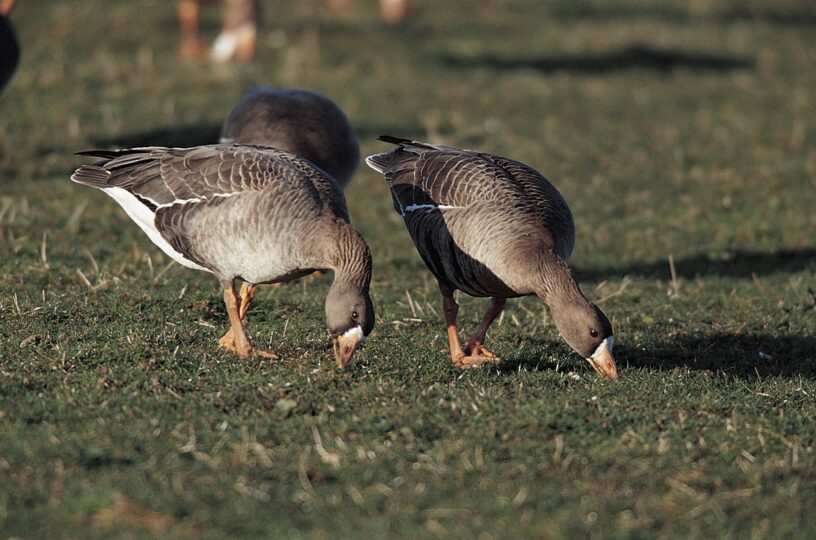
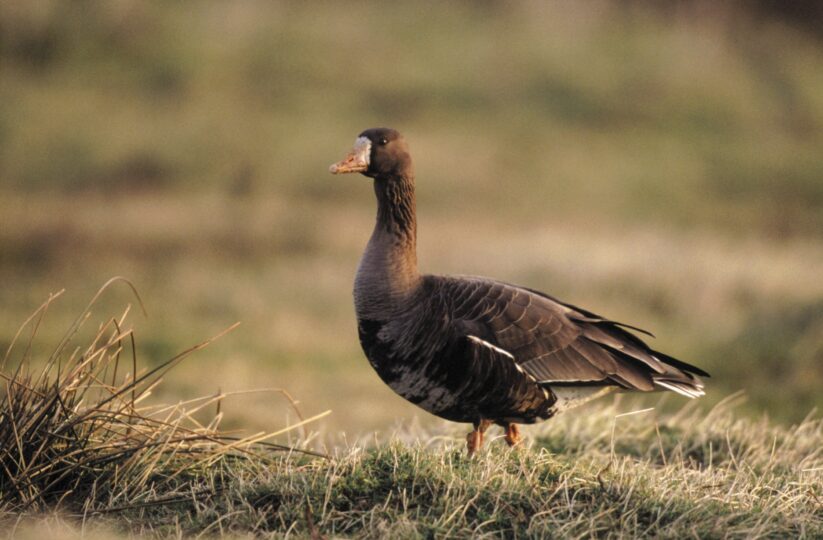
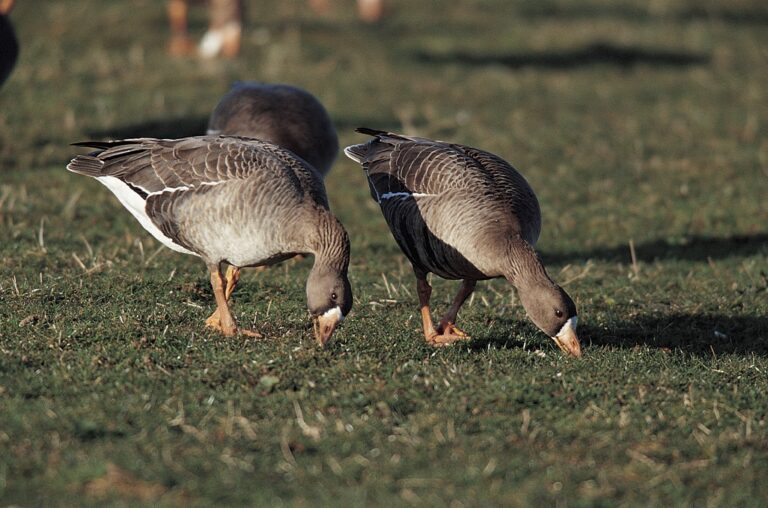
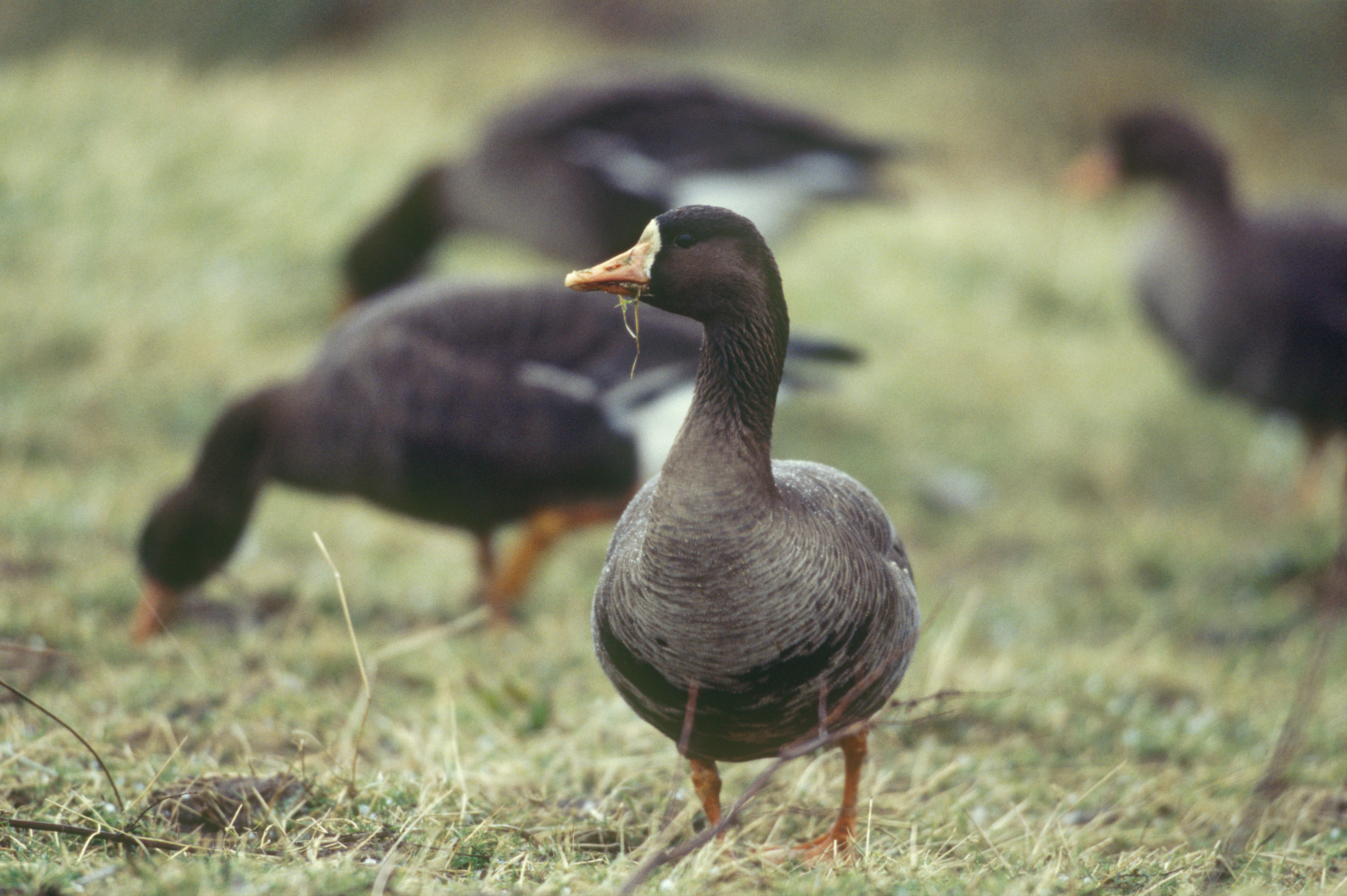
The Greenland white-fronted goose is a small goose – bigger than a mallard, smaller than a mute swan and slightly smaller than a greylag goose. The ‘white-front’ in the name of this species refers to the distinctive white forehead at the base of the bill. The body and neck are grey-brown and they have distinctive black barring on the belly. Both the legs and bill are orange.
Listen to its call (Credit: Matthias Feuersenger / xeno-canto)
Migration
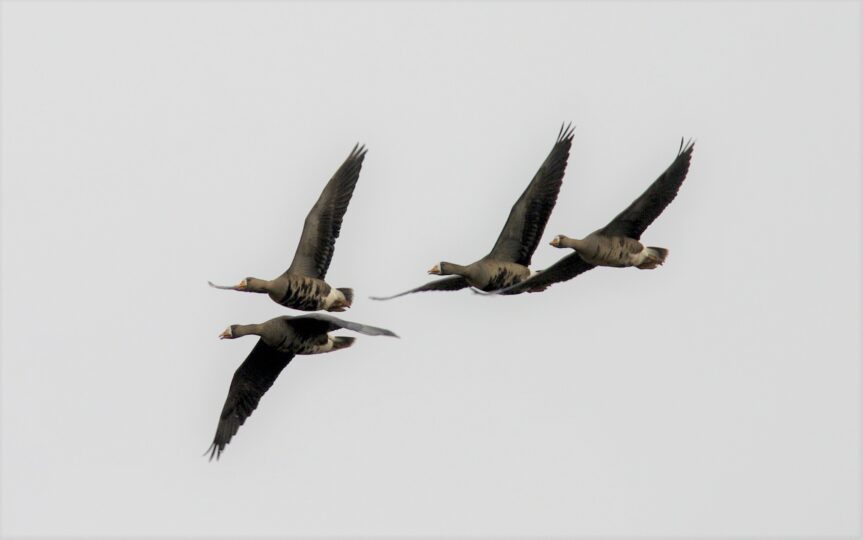
Each year Greenland white-fronted geese embark on a journey of around 2000 miles from western Greenland to their wintering grounds in Ireland and the UK.
Distribution
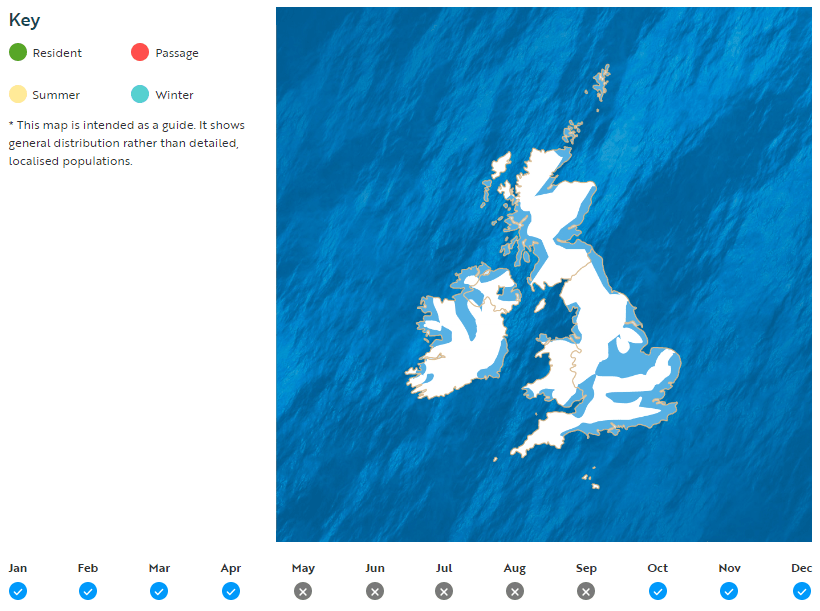
Greenland white-fronted goose UK distribution map. Credit: RSPB www.rspb.org.uk/birds-and-wildlife/white-fronted-goose
Habitat and feeding
Habitat: Low-lying wet grassland, arable and grazing farmland, coastal marshes and river valleys.
Feeding: Feeds solely on plants including seeds, roots, stems and leaves including grains, potatoes and sugar beet.
Conservation status
UK Conservation Status: Red
Threats
Following declines in wintering numbers from the 1950s to the late 1970s, lobbying led to protection from previously unsustainable levels of hunting in Britain and Ireland from 1983. Numbers more than doubled from 16,540 in 1983 to a peak of 35,570 in spring 1999 – a conservation success story.
Since then, however, a new threat has emerged. Climate-change-driven cooling of spring and early summer temperatures in west Greenland has severely suppressed reproductive success, resulting in fewer young birds. The population had declined to 15,020 by spring 2024. Disturbance and loss of optimal habitat in Britain may also be a factor, reducing the condition of geese as they embark on their spring migration.
What Species on the Edge is doing
- Working directly with landowners at key sites to produce tailored management advice
- Study of habitat to help inform the development of future agri-environment support schemes for Greenland white-fronted goose habitat management
- Conversations with farmers and landowners to inform future advisory work
- Management of wet fields for the species at RSPB Oa Reserve in Islay
Gallery