Adventures on the north-east coast
Butterfly searching from the sea
In August, Tracy, our Project Officer for the northern section of our east coast project area, had a couple of days off and what better way to spend it than exploring a remote section of the Easter Ross peninsula, by sea! Aerial images of this section of cliffs look promising for Northern Brown Argus but access is not possible from the steep cliff tops. An awe inspiring day was spent sea kayaking along the coast. What could be more mesmerising than the sound of dolphins breathing behind you in the mist and solitude of the firth. A mother and calf followed us for a while and the whole pod was feeding and breaching further out in the firth.
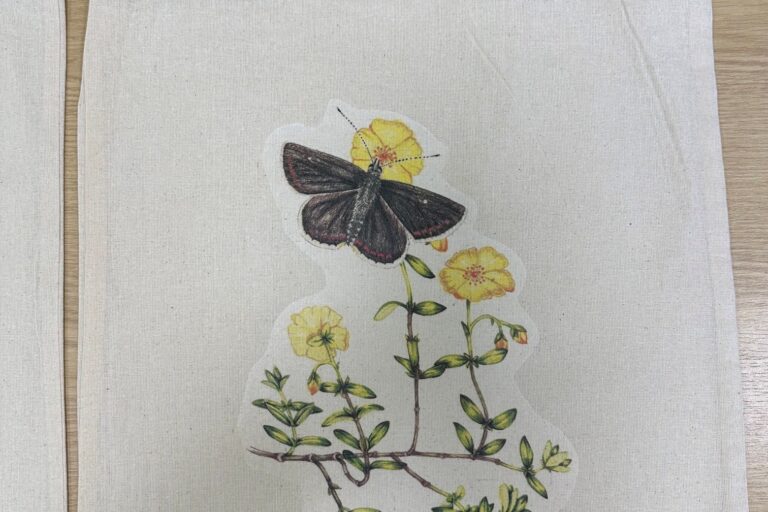
To round off a very memorable day, Tracy found two new sites for Northern Brown Argus with several colonies present at each location. There is potential for further sites to be found here; the habitat in places also looks promising for Pearl Bordered Fritillary

Bolstering the Small Blue
Back to the day job and August found Tracy busy and heavily involved in cross-partnership working with Scottish Wildlife Trust (SWT) as we work together to secure the future of Small Blue at the SWT Spey Bay Reserve. In recent years the Small Blue transect has been repeatedly flooded in winter storms, and, with limited habitat available, Small Blue numbers have been declining. Work is under way to secure a JCB contractor to carry out large-scale scrub removal this autumn as well as sculpt some higher mounds to hopefully encourage Small Blue up above sea level. There is a strong Small Blue colony approximately 2km along the coast on Forestry and Land Scotland (FLS) land and we will be working with both FLS and SWT to improve habitat along the coastline to allow for greater movement and resilience of Small Blue in this area.
This year we have confirmed second brood Small Blue is as far north as Dornoch up in Sutherland, down through Easter Ross and right out to the Bin Forest in Huntly. In fact they were still flying strong at The Bin in early September! How they will have fared is yet unknown, given the limited amount of Kidney Vetch available to them and also the cooler temperatures and shorter days at this time of year.

Mothing madness
August and September saw the East Coast SotE crew embark on a series of moth trapping events; many of our Small Blue sites also have the potential to play host to the ever-elusive Portland moth. This year Tracy was delighted when members of the recently-created Nairn Small Blue Group began to dip their toes into the wonderful world of moths, and low and behold one member sent through an image of Portland for identification! This keen group of wildlife enthusiasts are eager to support us with not just Small Blue surveys but also raising awareness of their local species.
Unfortunately this year we did not manage to trap Portland but we once again had Caryocoloum blandelloides at the MoD range, Morrich More. The MoD have been carrying out extensive gorse removal at this site and we will seed some of the bare patches with Kidney Vetch to benefit Small Blue. Did you know how destructive sand hoppers could be?! Check out the holes they made in our mothing sheet below. As always, moth trapping events are a great way to engage with a wide range of both landowners and members of the public.

Primary students get stuck in for nature
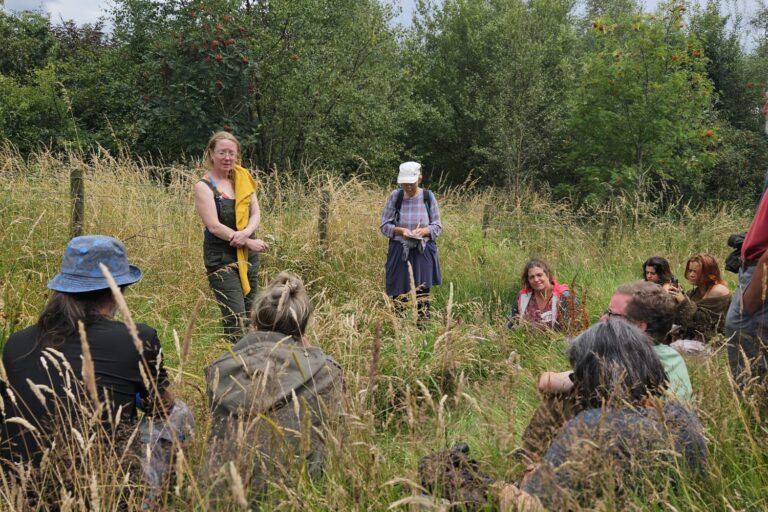
Perhaps the most exciting part of late summer was beginning work with a group of young people to help them build skills, confidence and a connection to nature. The group are from a local primary school and all struggle with the classroom situation for a variety of reasons. The group will take part in a series of nine morning sessions out at a local Small Blue site, where they have been given a glade within the quarry that is their responsibility to look after for Small Blue.
Quote of the day was from one young boy who was using a hand lens for the first time ever. Looking at some lichen he exclaimed “woah, it’s like a magic snowy forest!”. I was secretly on the side of the youngster who had enjoyed exploring how deep the mud was – the teacher was less impressed. It was a pleasure to spend time with this group and invigorating to see their excitement at all things tiny!

Bordered Brown Lacewing is all the buzz further south
Down in the southern portion of our east coast project area, Species on the Edge Buglife Project Officer, Fiona, is out and about championing one of our smaller ‘species on the edge’ – the Bordered Brown Lacewing.
Celebrating 200 years of the Bordered Brown Lacewing

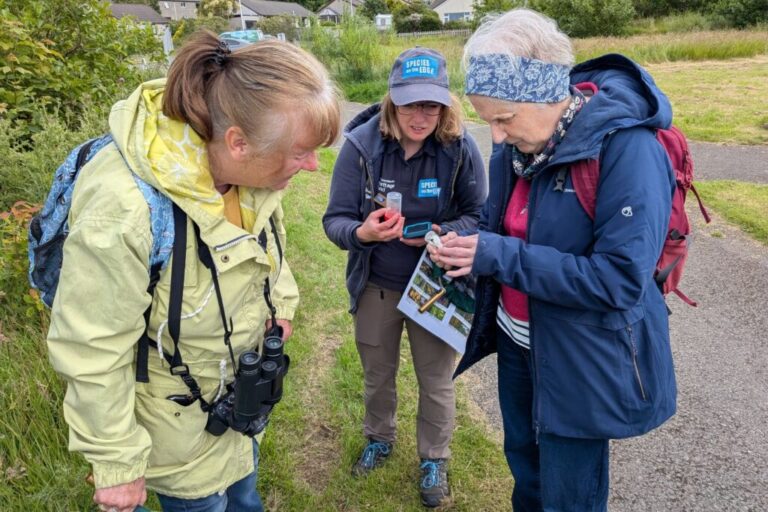
This summer, Fiona launched our “200 Hours for Lacewings Challenge” to mark 200 years since the first UK record of the Bordered Brown Lacewing. Volunteers and local enthusiasts have been out surveying, learning identification skills, and helping us better understand where this elusive species is found. Thanks to their efforts, we’ve already doubled the number of Bordered Brown Lacewing surveys compared to last year — a brilliant achievement that shows the growing local interest in invertebrate conservation. We’ll be be on the hunt for new potential Bordered Brown Lacewing sites over the coming months, identifying patches of Wood Sage along the coast to add to our list of future survey locations.
You can learn more about the rare beastie and how you can get involved in the challenge by watching our online session here:
Habitat improvement for lacewings and butterflies
We’ve been getting hands-on at Perthumie Bay in Stonehaven, where a hardworking group of volunteers have been helping with scrub removal. They’ve been clearing back brambles to make space for Wood Sage, a key plant for the Bordered Brown Lacewing, and Common Rock-rose, vital for the Northern Brown Argus. It was a great day of practical conservation and teamwork on the coast.
We also recorded a second brood of Small Blue in Angus, and we’ll be keeping a close eye out for this again in 2026!
Looking ahead
Work parties in the north
Up in the north with Tracy, we’ll be leading a series of work parties over the coming months from Tain, to Ardersier and along to Huntly.
Here’s what we have in the diary so far:
- Friday 31st October 2pm to 4pm, Tarbat Ness
- Friday 7th November 2pm to 4pm, Tarbat Ness
- Saturday 8th November 11am to 3pm, Huntly
- Friday 21st November 1pm to 3pm, Tarbat Ness
- Friday 6th February 2026 1pm to 3pm, Tarbat Ness
- Friday 20th February 2026 1pm to 3pm, Tarbat Ness
To find out more and to register your interest in coming along, email Tracy: tmunro@butterfly-conservation.org
And further south…
Fiona is looking for volunteers to help with Small Blue butterfly transects across Angus in 2026. Over the winter months, she’ll be offering training opportunities so that everyone’s ready to hit the ground running next spring — especially as our eager invertebrates took to the wing earlier than usual this year!
Keep an eye on your emails for these opportunities, or drop Fiona an email to let her know you’re interested: fiona.basford@buglife.org.uk
To be kept up to date with all events and opportunities, sign up to our East Coast mailing list: Join our mailing list!