Supporting Scotland’s coastal farmland birds
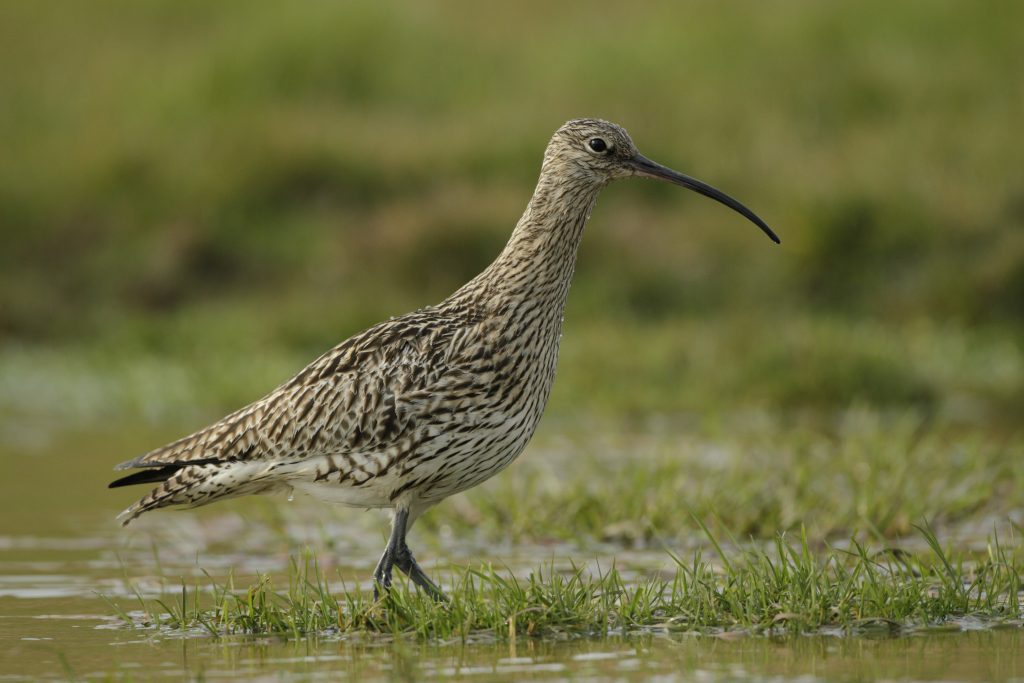
Over hundreds of years many bird species in Scotland have become reliant on low intensity farming practices that until the mid-20th century were common practice across most of the country. However, since the end of World War II the intensification of agriculture in the form of increased herbicide and pesticide use, continuous cropping and the loss of non-cropped habitats has led to the catastrophic decline of some of our most recognisable species (44% decline in Curlew and 32% decline in Lapwing 1995-2010).
Scotland’s coastal and island habitats are often the last strongholds for many species that were once common across Scotland as more traditional, less intensive farming practices are still used in these areas providing homes for wildlife as well as a living for the communities that manage the land. This High Nature Value farming (HNV) is key to the continued presence of some of our rarest breeding birds like Corncrake and Chough, however this method of farming is also under threat. Land abandonment, poor management and intensification all threaten this way of life and the birds that use these areas.
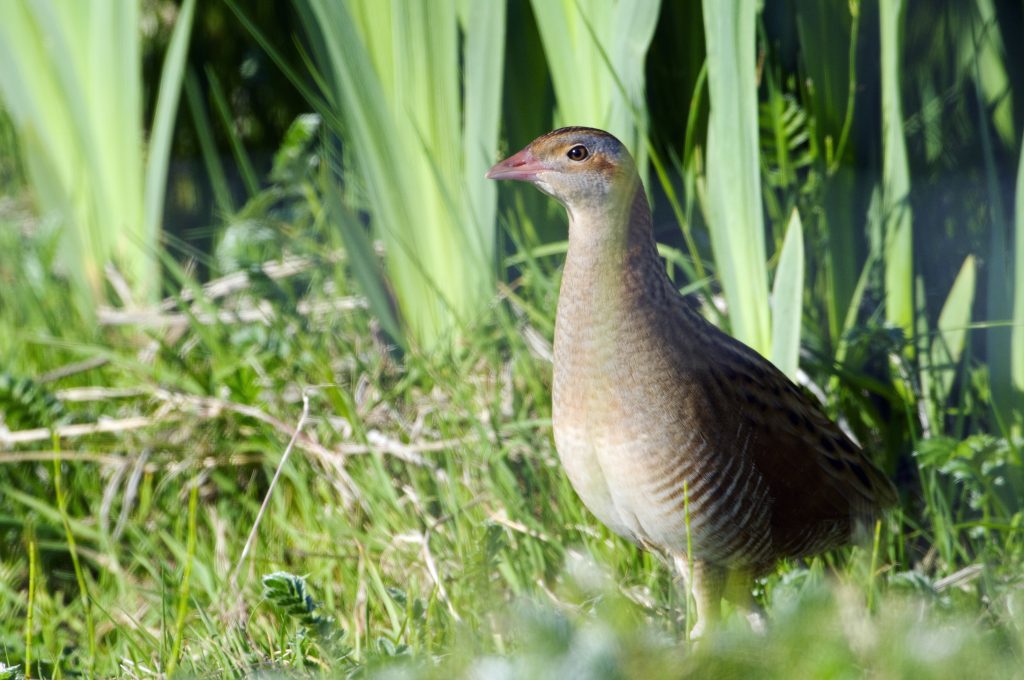
Through the Species on the Edge “Farming Horizons” project – a programme of habitat creation and enhancement – we are working to address these threats. The project works with land managers and local communities to help them fully realise the importance of these areas for farmland birds and, through a programme of 1:1 advice and workshops, increase the knowledge and requirements of these species that will have long lasting affects.
Working together, we aim to:
- Create and enhance breeding and wintering sites for farmland birds
- Work with land managers and provide 1:1 advice designed to assist them in providing safe breeding and wintering sites for farmland birds
- Increase the knowledge base of the requirements of farmland birds within local communities to enable individuals and groups to make a difference to the species local conservation status
Outputs
- 66 breeding wader sites monitored
- 430ha of habitat improved for farmland birds
- 2 lagoons created for overwinters waders and geese
- 91 land managers engaged in improving the land they manage for farmland birds
Let’s take a look at some examples of the work we are doing through the Farming Horizons project.
Improving testing of parasites in livestock in Islay
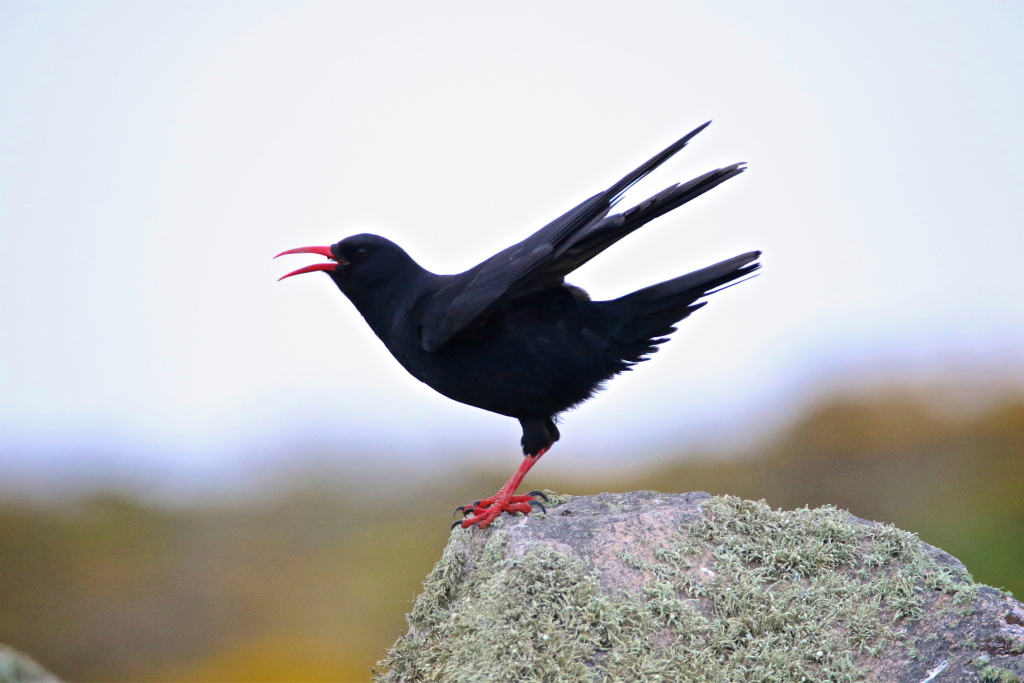
In Islay we are working with farmers and local vets to improve testing of parasites in livestock. What has this got to do with farmland birds? Well, the dung that the livestock produce is home to a whole community of invertebrates that are a valuable food source for our rarest farmland bird, the Chough. When livestock are treated for parasites it also makes the dung unsuitable for invertebrates meaning less food for Chough. By improving the speed that test results come back, vets can accurately recommend which animals require treatment meaning less medication in the dung, money saved for the farmer and, crucially, more food for Chough.
Creating habitat for waders in Shetland and Orkney
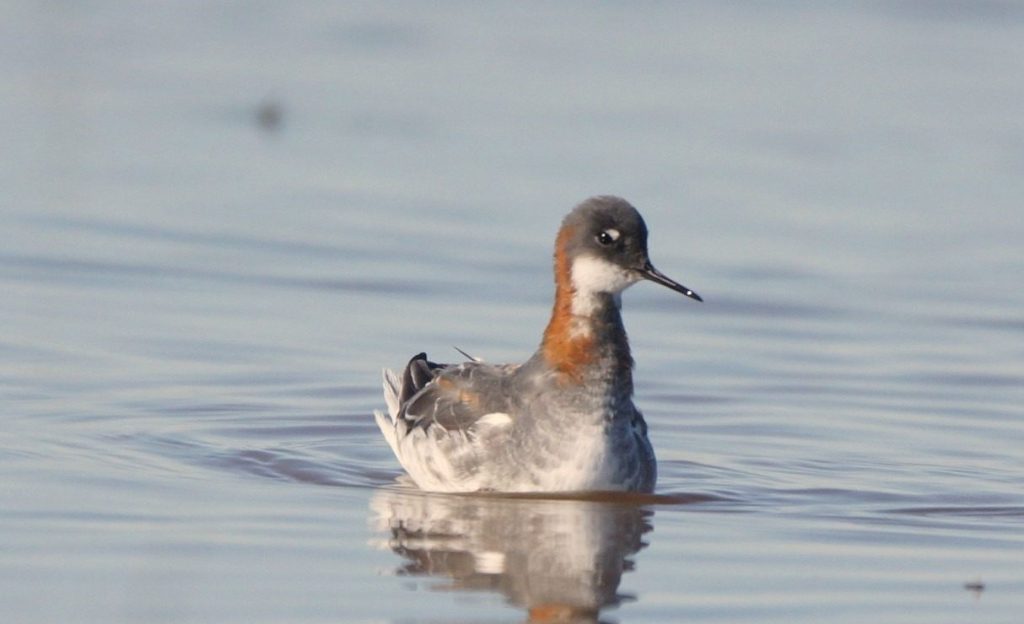
In Shetland we are creating habitat for waders including breeding ponds for an amazing little wader, the Red-necked Phalarope. Red-necked Phalaropes are incredible birds, migrating from the Pacific Ocean in spring to breed and raise their young in Shetland. Our team in Shetland are advising landowners on how best to manage their land for Phalaropes and other wader species as well creating scrapes (shallow pools) for the birds to feed and breed in.
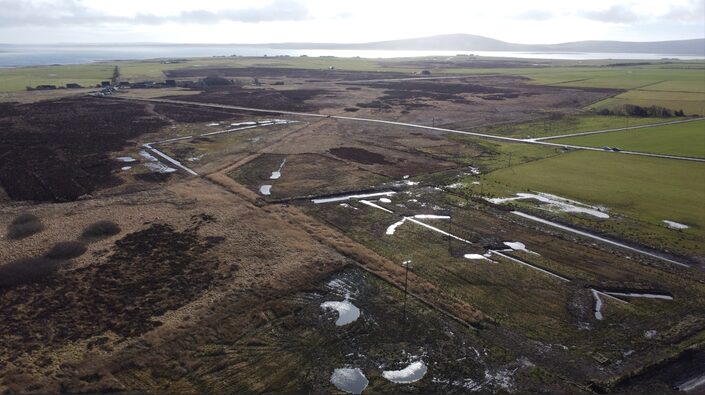
In Orkney, we are improving and creating new habitat for wading birds at Bluebrae Reserve, RSPB Rendall Moss. Over the winter of 2024-2025, we worked with the reserves team to oversee the reprofiling of ditches and the creation of open water features and hydrological control structures. This work will help retain higher water tables during the spring and summer period, whilst enabling the RSPB team at the reserve to release water quickly for management activities in the autumn period.
The image below shows a lapwing’s-eye-view of the site; previously you would not have seen any open water areas. As with any land works, some adjustments may be required once the scrapes and soil mounds we have created settle down. This will be assessed over the course of the summer. Already things are looking promising for the 2025 breeding season though – we currently have seven active lapwing nests in the area, compared to four in 2024!