A fragile fight for the UK’s smallest butterfly
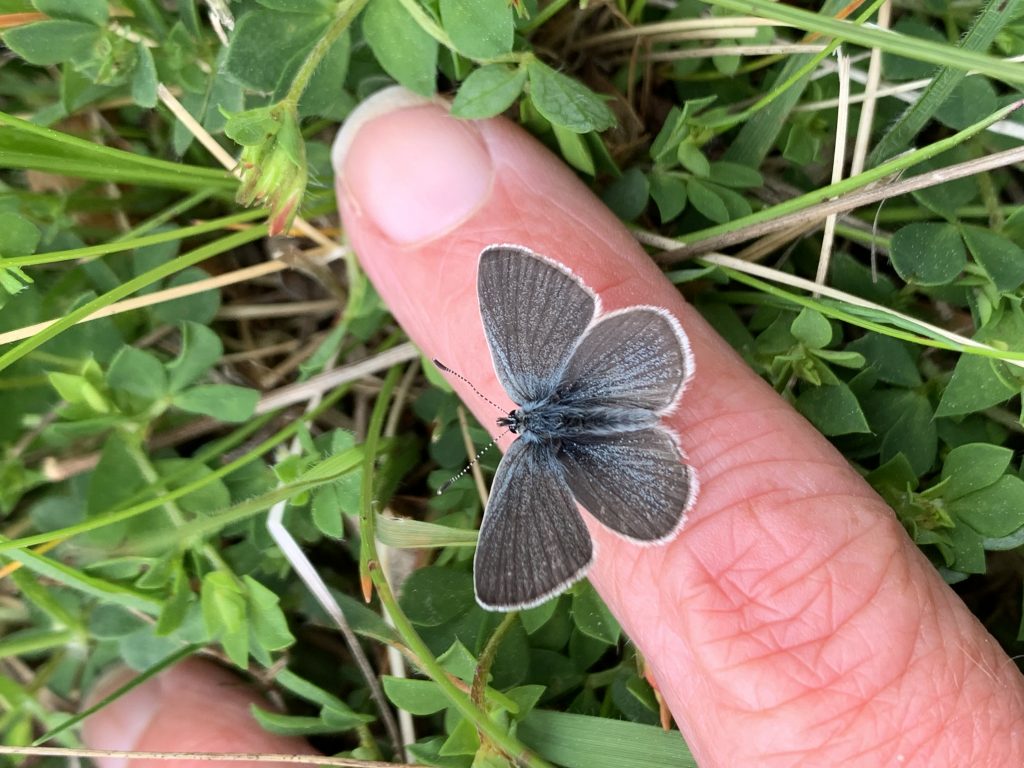
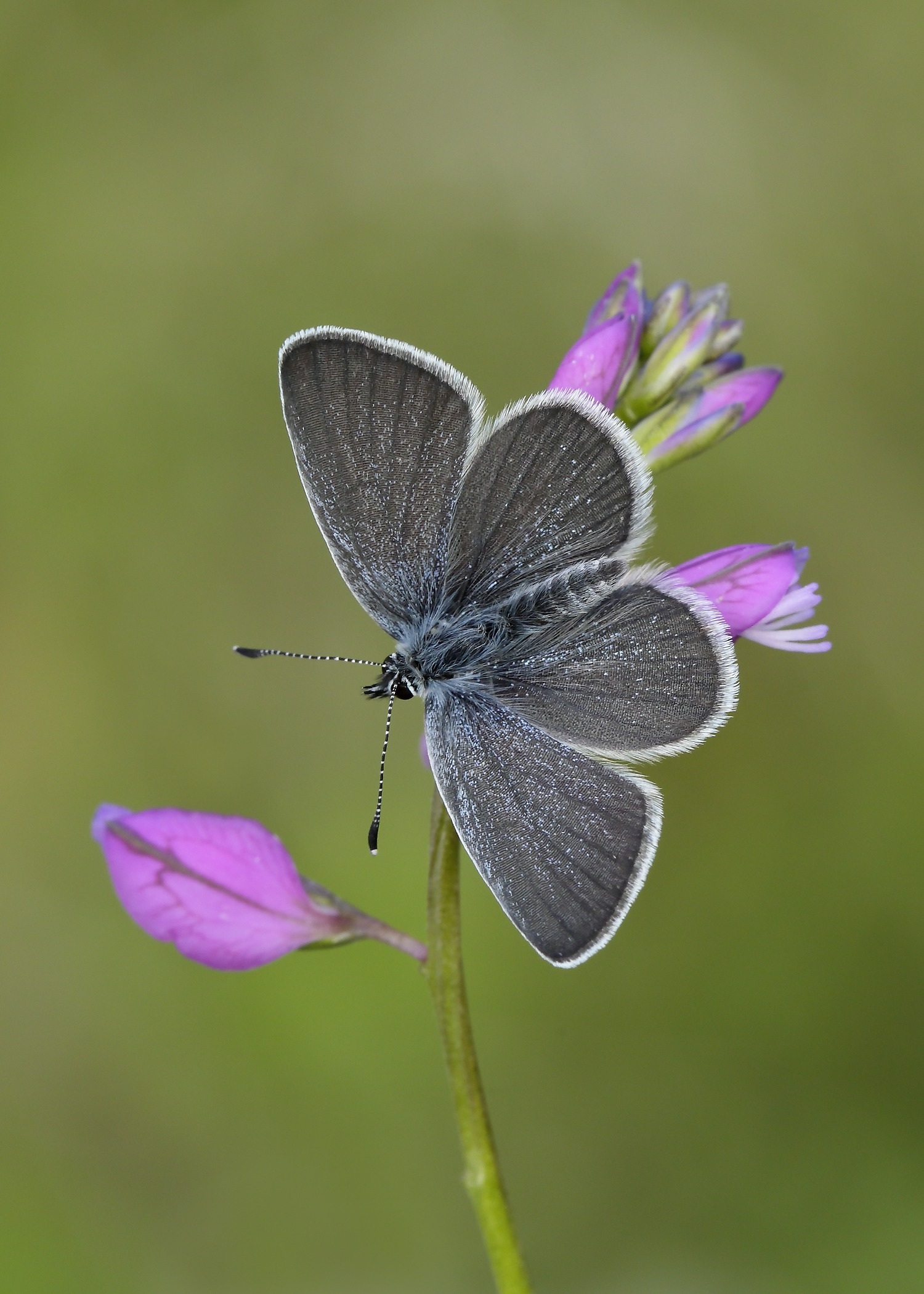
The Small Blue (Cupido minimus), or an gorman-beag in Gaelic, is the UK’s smallest butterfly with a wingspan of just 18-25mm. Due to its diminutive size it is an often overlooked species, making it all the more rewarding when you do successfully see it.
Small Blue is a primarily coastal species with its Scottish stronghold being along the inner and outer Moray Firth, with isolated colonies in Caithness and along the Angus coastline. The Small Blue caterpillar is incredibly fussy and makes life hard for itself by only eating one foodplant, Kidney Vetch (Anthyllis vulneraria); the butterfly therefore relies on sheltered grassland and sand dune systems where Kidney Vetch can flourish.

Across Scotland there are approximately 90 sites where Small Blue has been recorded. The inner and outer Moray Firth area has 56 known sites of this tiny butterfly, constituting around 63% of the national total. Small Blue is under threat from the increasing isolation of its colonies primarily due to habitat loss.
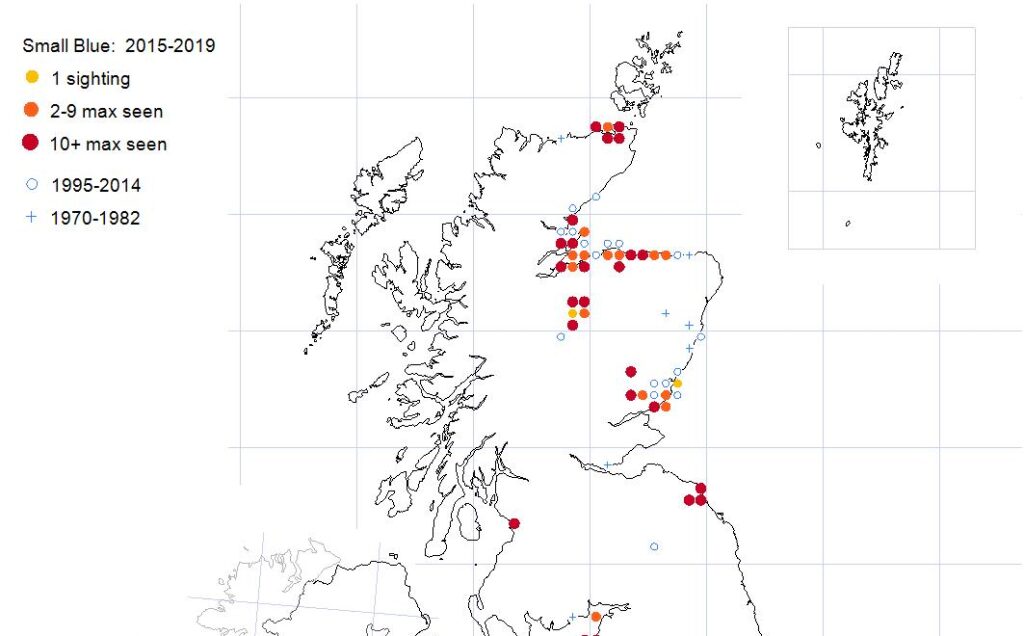
Prior to Species on the Edge, data on these fragmented colonies was based on ad-hoc survey reports received from volunteers. The majority of the sites had little to no habitat information, making it difficult to judge the status of the sites and asses the threat level. Many of the sites contained historical data only, with some only ever having one record and no subsequent site surveys in over twenty years. The lack of knowledge around the status of Small Blue and its foodplant made it difficult to initiate clear conservation plans.
The Species on the Edge programme presented the ideal opportunity to raise awareness, increase survey and monitoring efforts, engage with coastal communities and land managers to help fight for the plight of this lovely butterfly.
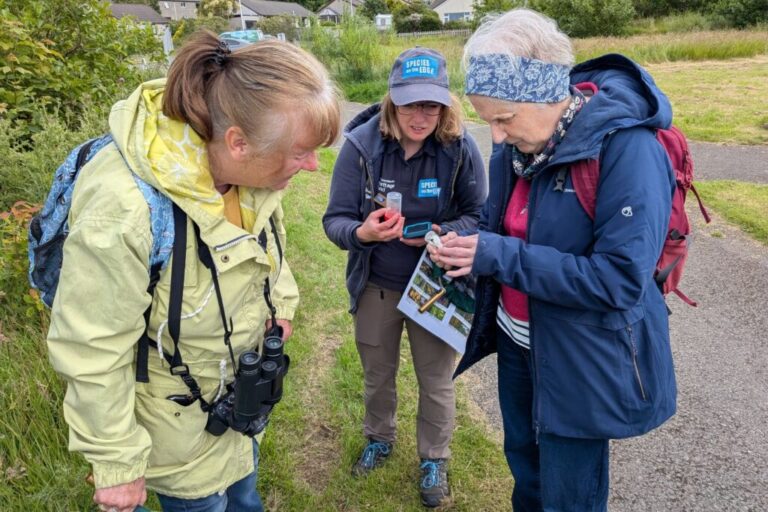
Following the launch of Species on the Edge in 2023 there has been considerable effort by staff, volunteers and land managers to increase the volume of survey and monitoring data along the inner and outer Moray Firth. Between 2023 and 2025 Species on the Edge staff have provided training online and in-person not only to volunteers but also land managers, partner organisations and government bodies. The result is a group of highly motivated and skilled individuals focused on achieving the best possible results for Small Blue.
Due to the length of coastline being surveyed – Easter Ross and Sutherland alone is over 250km – the results for this report have been mapped by region.
Site surveys in East Ross and Sutherland
East Ross and Sutherland holds a total of 13 Small Blue sites; all 13 have been surveyed. Kidney Vetch was recorded at 12 of these sites, with Small Blue present at 11 sites. Kidney Vetch was not found at one site in north Sutherland, feedback suggests widening the search area. These results are very encouraging, particularly given that it is over 15 years since some of these sites were last surveyed, yet Small Blue continues to be present at the majority of sites. One site has been lost to development.

Site Surveys in Moray and Banffshire
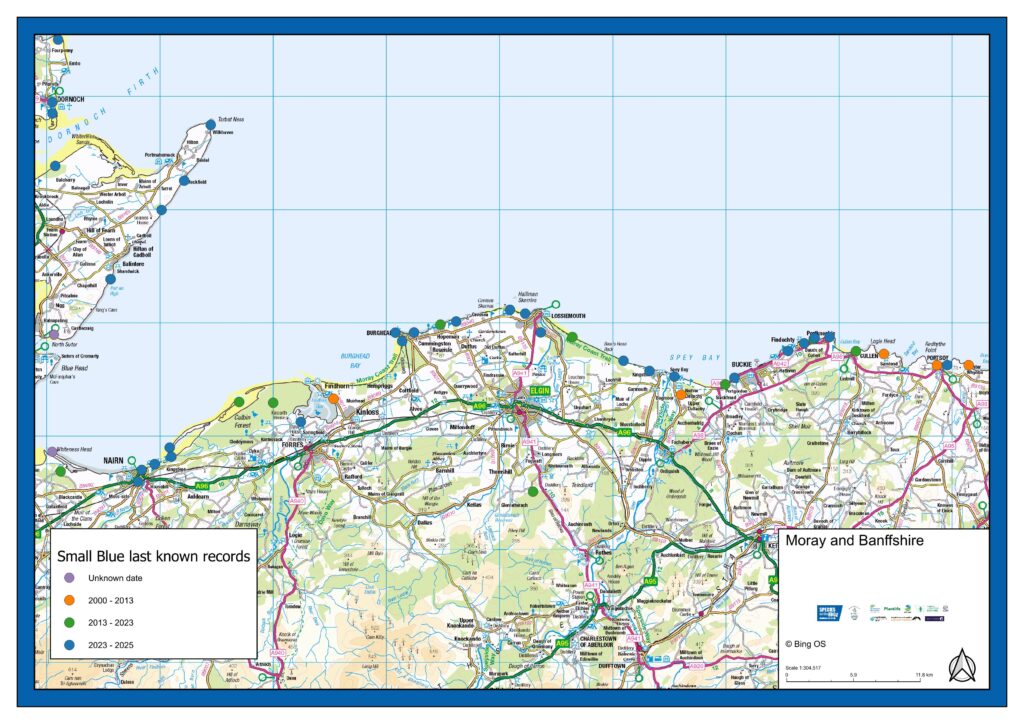
The Moray coastline is undoubtably the stronghold of Small Blue in Scotland with 48% of the total number of known Scottish sites situated along this diverse coastline. Originally Species on the Edge covered the area as far east as Buckie, but as news of the success of the programme has spread, requests from volunteers and landowners has also increased along the coast. Since 2024 the programme has been encouraging and working with volunteers into Banffshire, to survey for Small Blue as far along as Troupe Head.
Of the 43 sites now included along the Moray Coast, 32 have been surveyed with Small Blue reported at 29 of these. Kidney Vetch was absent from one of these 29 sites with very little Vetch persisting at another two. Kidney Vetch has been partially mapped for 50% of the sites surveyed; in 2026 we are looking to improve the number of sites mapped.
Habitat Threats and Land Management
Surveyors were asked to survey extensively for Kidney Vetch, indicate its presence or absence, and provide an indicator of any threats to a site; the top threats were then listed. Based on this information sites were given a RAG rating of green, yellow or red. Of the 40 sites rated, 30 were considered to be threatened, with 16 designated as Red.
| RAG Assessment Interpretation | |
| 🟢 Green | Site currently secure and capable of sustaining the colony without intervention |
| 🟠 Amber | Site vulnerable; food plant at risk without preventative management |
| 🔴 Red | Site at high risk of losing breeding population without intervention |

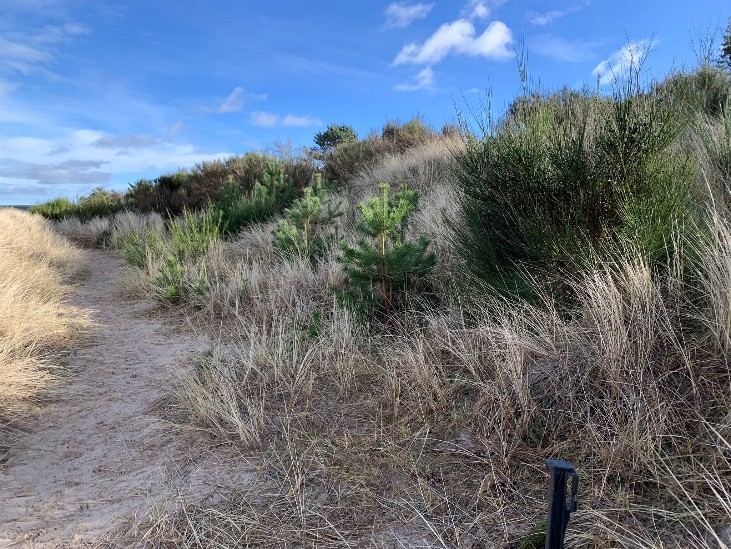
Sites across Scotland are under threat from a variety of factors, some of which we can work towards addressing, like scrub encroachment. Other threats such as sea-level rise pose a bigger challenge. Despite all this, several colonies appear to be thriving, with 2025 showing record numbers of Small Blue at many sites across the area. There are several sites along the coast where the dynamic nature of our shores allows some sites to take care of themselves, in the short term at least.
| RAG Assessment | Number of Sites |
| 🟢 Green | 10 |
| 🟠 Amber | 14 |
| 🔴 Red | 16 |
| Top Three Types of Threat | Number of Sites |
| Gorse | 18 |
| Sea-level rise | 18 |
| Scrub | 14 |
Species on the Edge has engaged with 26 landowners or land managers along the Inner and Outer Moray Coastline, and has provided 10 site-specific landowner reports containing recommendations and habitat management advice. We have led volunteer work parties at 12 sites and engaged contractors for both large-scale and delicate, specialist scrub removal, resulting in over three hectares of habitat being improved for Small Blue. Our volunteers along the East Coast have been outstanding and have contributed over 1,000 hours of their time to helping Small Blue! A huge thank-you to every single one who has helped us out, this project just would not have been possible without you.


Future Survey and Monitoring Effort
Through Species on the Edge we have succeeded in expanding the monitoring currently being carried out for Small Blue: we now have an extra five transects supplementing those previously established and over 10 timed counts scattered along the coast. As we head into the 2026 survey season we are looking for a final push to fill in the few remaining blank spaces before the programme ends. We are looking for volunteers for the following:
- Survey an un-surveyed site from the map below (black dots)
- Re-survey one of our priority sites (amber and red dots)
- Choose a site to conduct long-term monitoring at (can be either timed counts or a single species transect)
Please get in touch for more information on any sites that you would like to take on. Surveys are from early May to early July.

For more information and to register an interest in a site please get in touch with Tracy Munro: tmunro@butterfly-conservation.org