By Gareth Powell, Species on the Edge People Engagement Officer for Shetland
The natural and cultural landscapes of Shetland are intertwined. Digging through our past reveals the dance of a landscape influenced by its geology, a changing climate, and the hand of previous generations. It tells the tale of the survival of people reliant on their land and a land that was shaped to support the wildlife and people that walk its coasts today.
This summer Species on the Edge started its Art in Nature series, working with local artists to explore our connection to the land and the other beings that live upon it. In a series of art workshops with each artist, the community was invited to learn and share the stories of their landscape, develop new skills, and create pieces of art inspired by these stories.
Making music with Jenny Sturgeon

In July, we teamed up with Jenny Sturgeon, a fantastic musician and sound artist, to explore the connection between Huxter’s Ancient Water Mills and the lochs, hills and waders that live upon them. These ancient mills span the ages, first used by the Norse and only falling quiet 70 years ago. They are surrounded by a myriad of flowers, layered in myths of Nyuggels, and encompassed by the flight and calls of Shalders (Oystercatchers) and Peerie Whaaps (Whimbrel).
By capturing the bubbling burn that powered these mills through the centuries, the cry of the Whaap (Curlew) which graced the ear of all who found their place upon the mill path, and adding our songs and poems of our current connection to nature, a piece of music was created that weaves the landscape together.
Creating prints with Diane Garrick
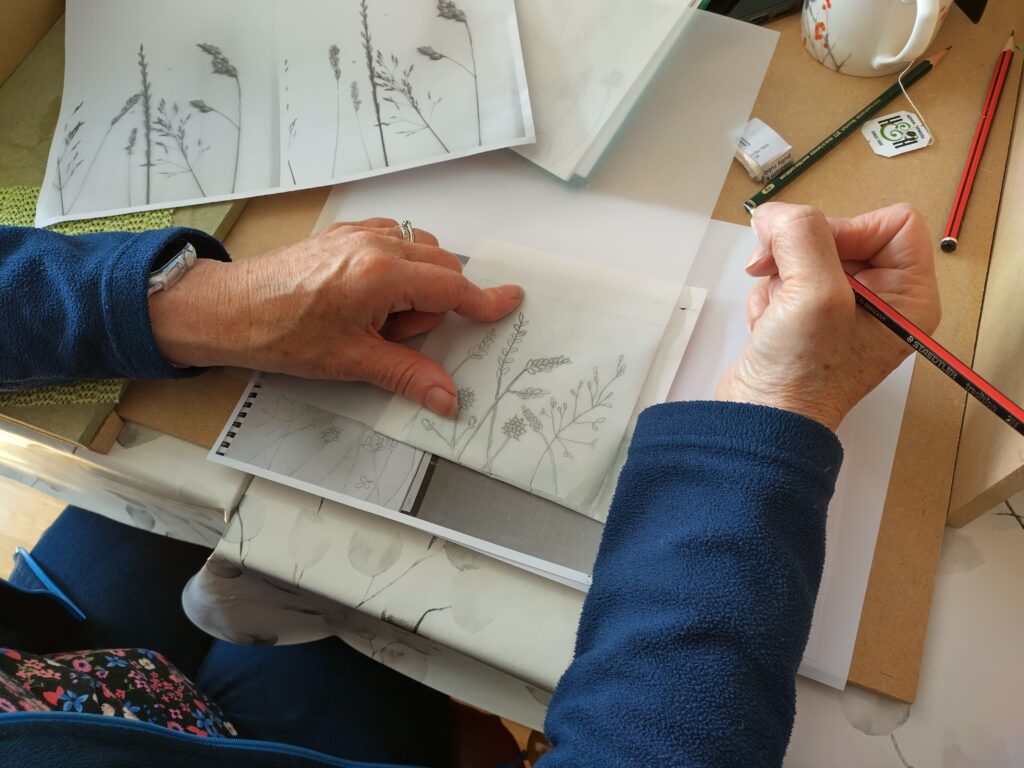
In August, Diane Garrick led several workshops exploring the botanical history of Catpund’s Norse Kleeber (soapstone) mines. The scars of the past – visible within the burn today – hint at the greater work done to shape the wider landscape.
The workshops started with a guided walk of the site led by local folklorist Jordan Clark, exploring the Shetlandic names of flowers and their usage through time. We dove into the history of the chisel marks, the collapsed walls, the missing flowers and the ones brought in by feet. With her expertise in botanical illustration and lino printing, Diane then guided us to create images combining these heavy marks of human influence with the landscape that lives around the burn.
Silversmithing with Helen Robertson
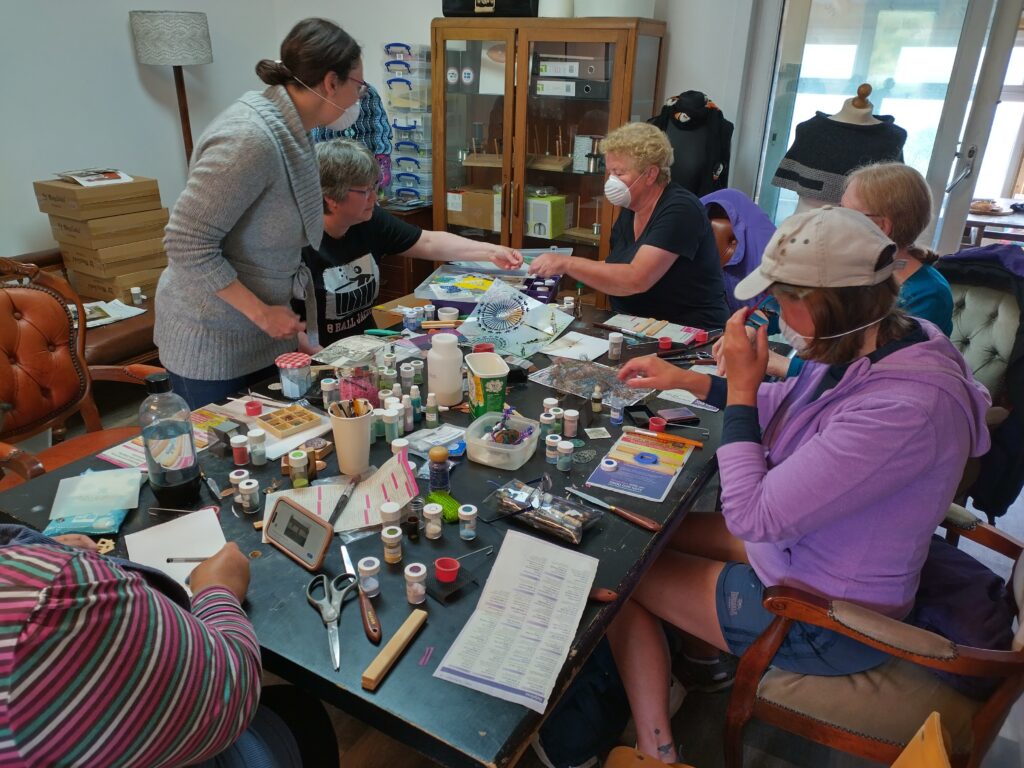
Our next series of workshops kicked off with a guided walk to Stenness, one of the last homes of Shetland’s Oysterplants. Local guides from the Tangwick Haa museum informed the group Stenness was once a hub of fishing activity, with over 80 boats lining its cobbled shore; today it is a hub of Oysterplant activity, with over 130 plants adorning its shore. Oysterplant is suffering from rising sea levels, grazing pressure (it’s very tasty), and direct intervention from humans (gravel removal).
With the history of Stenness in our heads and Oysterplant to protect, silversmith Helen Robertson took us down the path of jewellery-making, knitting and crocheting to create some stylish Oysterplant protection and some amazing pieces to wear and spread the Oysterplant’s influence around Shetland. The green leaves and purple flowers of the Oysterplant were translated by attendees into copper, glass, and wool.
These workshops with Jenny, Diane, and Helen have allowed us to explore the natural and cultural connections of Shetland’s landscape. The finished pieces will be exhibited at our ‘Exploring our Natural and Cultural History Art Exhibition’ in Cunningsburgh from 7 – 21 December 2025. Find out more here: Exploring our Natural and Cultural History Art Exhibition