Learn about the UK’s bats and how you can help them in this online talk led by Species on the Edge Bat Conservation Trust Officer, Cathryn.
Our bat ‘species on the edge’
Here at Species on the Edge we are working to support and raise awareness for four Scottish bat species: common pipistrelle, soprano pipistrelle, Daubenton’s bat, and the brown long-eared bat. While we know that bats are in decline across the UK, the bats of Scotland’s coasts and islands remain a bit of a mystery; we lack the data to really know how they are faring, and consequentially, how we can help them. That’s where you can help!
Through Bat Conservation Trust’s National Bat Monitoring Programme, you can take part in simple (or less simple – the choice is yours!) surveys to help us learn more about Scotland’s bats. Getting the Scottish public to help collect data on our bats is crucial – there is just not enough scientists on the ground to leave it to the professionals. So, don your citizen scientist cap, and help protect Scotland’s bats!
How to get involved
Bat Conservation Trust have a number of different bat surveying projects you can get involved in:
Sunset survey
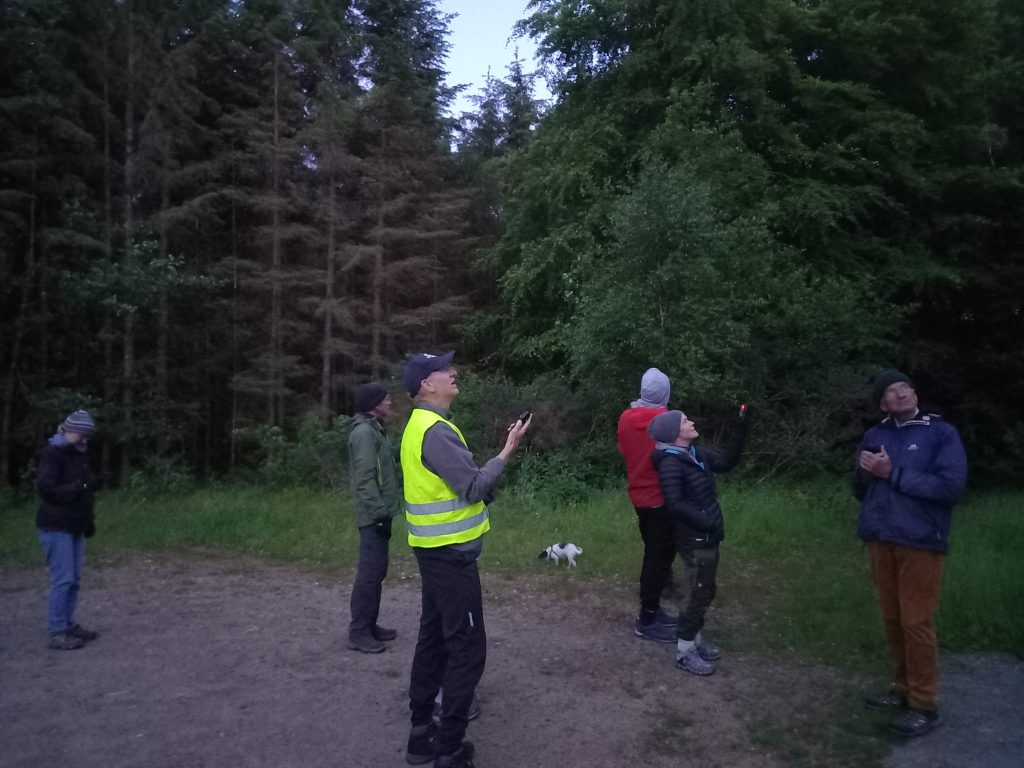
- What: Spend an hour at dusk or dawn looking out for bats and other nocturnal wildlife. Can be done from your garden, watching from your window or balcony, or walking around your local area.
- When: Anytime from April to October.
- Experience level: No experience necessary
- Commitment required: Can be done once, or as many times as you like.
- Equipment required: Survey form, pencil/pen, torch, watch.
- More information: www.bats.org.uk/our-work/national-bat-monitoring-programme/surveys/sunset-sunrise-survey
Roost Count
- What: If you have a bat roost at or near your house, you can sign up to Bat Conservation Trust’s Roost Count to record the number of bats in the roost. The Roost Count involves doing two evening counts between 6th and 25th June at least five days apart. When doing the surveys, position yourself beneath the roost exit at around sunset, watch the exit carefully and count bats as they emerge from a roost. Sign up to the Roost Count by May to receive your survey pack.
- When: June
- Experience level: No experience necessary
- Commitment required: Two counts
- Equipment required: Survey form, pencil/pen, torch, watch.
- More information: www.bats.org.uk/our-work/national-bat-monitoring-programme/surveys/roost-count
Waterway Survey
- What: Take part in the Waterway Survey to monitor activity of one of our ‘species on the edge’: the Daubenton’s bat. Sign up to the survey by July, select your sites and carry out your surveys in August. The survey begins 40 minutes after sunset and usually takes about one hour. Count the number of Daubenton’s bat passes for four minutes at ten stopping points along the waterway. The first survey should be between 1st and 15th August and the second survey between 16th and 30th August.
- When: August
- Experience level: Suitable for beginners and for those with more experience.
- Commitment required: Two surveys
- Equipment required: a heterodyne (tuneable) bat detector and a torch. Bat Conservation Trust have a limited number of bat detectors to lend to volunteers. Request to borrow equipment: www.bats.org.uk/our-work/national-bat-monitoring-programme/equipment-loan-request
- More information: www.bats.org.uk/our-work/national-bat-monitoring-programme/surveys/waterway-survey


Field Survey
- What: Take part in the Field Survey to monitor the summer activity of noctule, serotine, common pipistrelle and soprano pipistrelle. Sign up to the survey, select your sites and carry out two surveys in July. The survey begins 20 minutes after sunset and usually takes about 90 minutes. Your survey route will have 12 stopping points. While walking between stopping points count any noctule and serotine passes. Stop for two minutes at each stopping point and count any common and soprano pipistrelle passes. The first survey should be between 1st and 15th July and the second survey between 16th and 30th July. Carry out a daytime recce of your site to make sure your route is suitable and all walks and spots are safe and accessible. If needed, modify the route to avoid potential hazards when walking at night, or contact Bat Conservation Trust for a different site.
- When: July
- Experience level: Experience required of identifying the target species.
- Commitment required: Two surveys
- Equipment required: a heterodyne (tuneable) bat detector and a torch. Bat Conservation Trust have a limited number of bat detectors to lend to volunteers. Request to borrow equipment: www.bats.org.uk/our-work/national-bat-monitoring-programme/equipment-loan-request
- More information: www.bats.org.uk/our-work/national-bat-monitoring-programme/surveys/field-survey

Hibernation Survey
- What: Sign up to the Hibernation Survey to survey bat hibernation sites between December and March. Help Bat Conservation Trust analyse population trends, identify changes in numbers of bats over and above ‘natural’ fluctuations, and highlight any signs of significant change. The survey requires two counts between December and March; try to ensure that there is at least one week between each count. Please note that to take part in hibernation surveys you need to hold a bat licence that permits you to carry out hibernation surveys or know of a licensed surveyor who can accompany you. For further information about the relevant licence required, please contact your Statutory Nature Conservation Organisation (SNCO) headquarters or BCT (nbmp@bats.org.uk).
- When: December – March
- Experience level: Licence required.
- Commitment required: Two counts.
- More information: www.bats.org.uk/our-work/national-bat-monitoring-programme/surveys/hibernation-survey